

Solid tungsten carbide possesses exceptional hardness, wear resistance, and cutting-edge retention, making it an attractive alternative material for implant drills. However, its relatively brittle mechanical behaviour has historically limited its clinical application because conventional pilot-to-final drilling sequences expose the smallest drills to the highest torsional and bending stresses.
The Crown Down concept was developed to overcome this engineering limitation by redistributing drilling forces so that the largest and mechanically strongest drill prepares the dense cortical bone before smaller drills complete the trabecular osteotomy. This review examines the scientific rationale behind this alternative osteotomy philosophy, emphasising material science, biomechanics, drill wear, thermal considerations, osteocompression, autogenous bone harvesting, and potential clinical applications. Although preliminary laboratory and clinical evidence is encouraging, additional prospective comparative studies are needed to determine whether these engineering advantages translate into superior longterm clinical outcomes.
Introduction
Successful implant therapy depends on precise osteotomy preparation. The implant osteotomy determines implant position and angulation while influencing primary stability, surgical efficiency, heat generation, and the biologic response of surrounding bone during healing. Although implant macrodesign, surface technology, digital treatment planning, and guided surgery have evolved considerably over the past three decades, the fundamental principles of implant site preparation have changed remarkably little.1-4
Conventional implant osteotomies continue to be prepared using sequential stainless-steel drills that progressively enlarge the osteotomy from a narrow pilot drill to the final implant diameter. This technique has demonstrated excellent long-term clinical success and remains the benchmark against which alternative osteotomy protocols should be evaluated. However, sequential drilling requires multiple drill changes and repeatedly exposes each drill to dense cortical bone, contributing to progressive drill wear, reduced cutting efficiency, increased friction, and greater thermal generation during osteotomy preparation.2-7
These limitations have stimulated interest in alternative cuttingmaterials capable of maintaining sharp cutting edgesover prolonged clinical use. Solid tungsten carbide possessesexceptional hardness, wear resistance, and cuttingedgeretention, making it an attractive alternative to stainlesssteel.6-8 However, its relatively brittle mechanical behaviour has historically limited its application because conventional pilot-to-final drilling sequences expose the smallest drills to the highest torsional and bending loads while penetrating dense cortical bone. The Crown Down concept was developed to overcome this engineering limitation by reorganising osteotomy preparation according to the mechanical properties of both bone and drill material rather than simply enlarging the osteotomy sequentially. This review examines the scientific rationale, biomechanics, material science, and potential clinical applications of this alternative osteotomy philosophy.
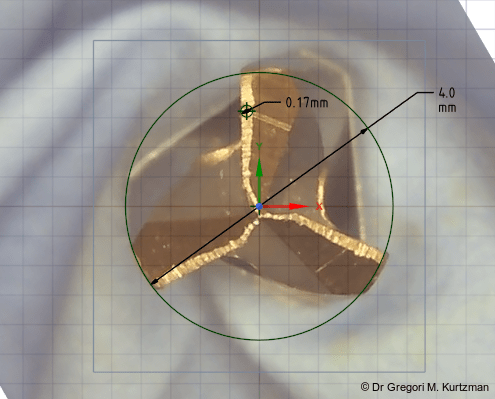
Fig. 1: Wear noted on stainless steel drill after repeated osteotomy preparation use.
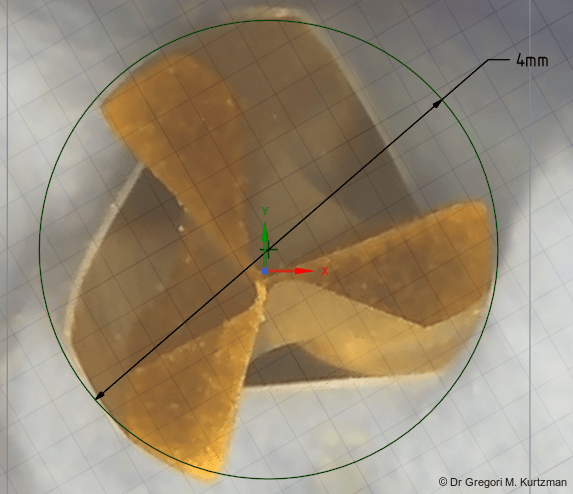
Fig. 2: Lack of wear noted on Tungsten carbide drill after repeated osteotomy preparation use.
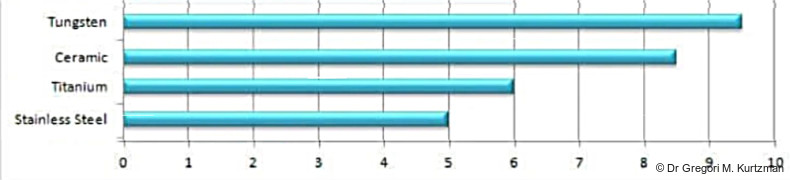
Fig. 3: Relative hardness comparison of materials commonly used for implant drill manufacture.
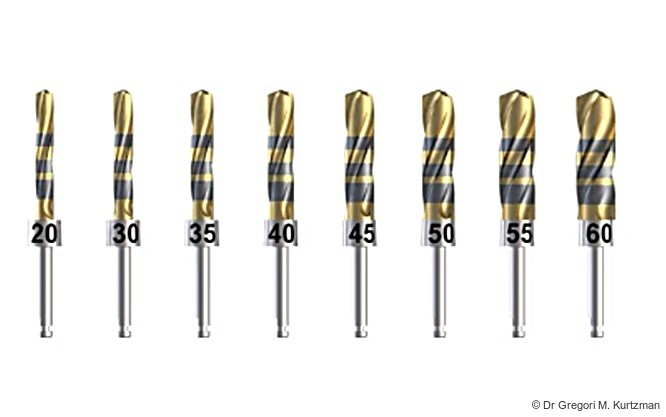
Fig. 4: The diameters available for the Tungsten carbide Crown Down drills.
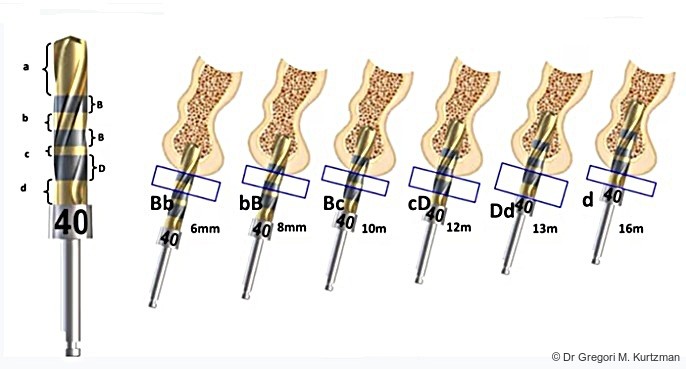
Fig. 5: Crown Down osteotomy preparation using a 4.0 mm drill, with sequential advancement progressively enlarging the osteotomy from the crestal cortex to the final depth, reducing drilling torque and heat generation.
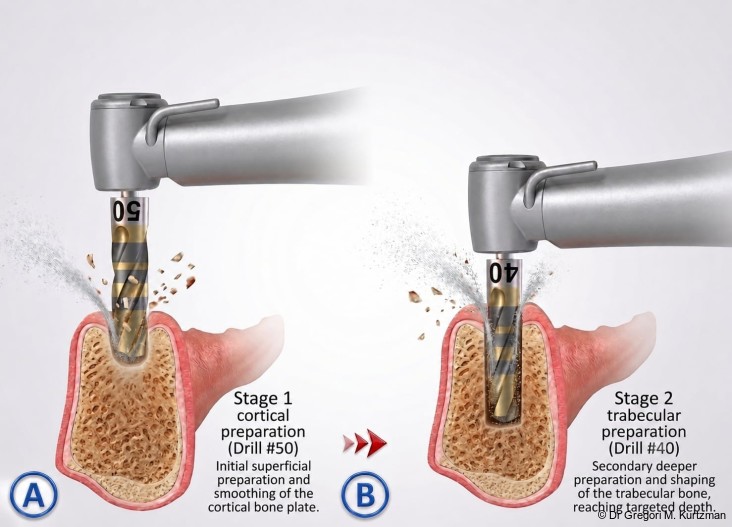
Fig. 6: Two-drill Crown Down osteotomy protocol utilises a cortical drill that matches the planned implant diameter enlarging only the crestal portion of the osteotomy relieving cortical resistance at the planned implant site (A), then a final implant-specific drill (4.0 mm shown; B) completes the osteotomy to the planned depth and diameter. This two-drill Crown Down protocol replaces the conventional 4 or more drill sequential osteotomy technique while reducing drilling time, instrument changes, and mechanical stress on the drills.
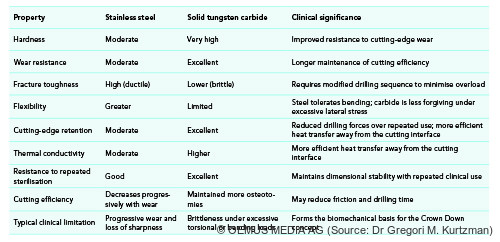
Table 1: Comparison of stainless steel and solid tungsten carbide implant drills.
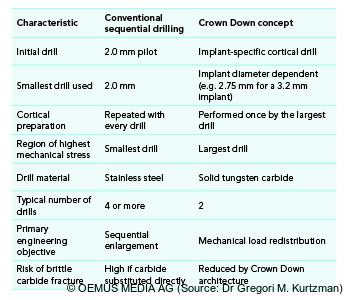
Table 2: Conventional sequential drilling versus the crown down concept.
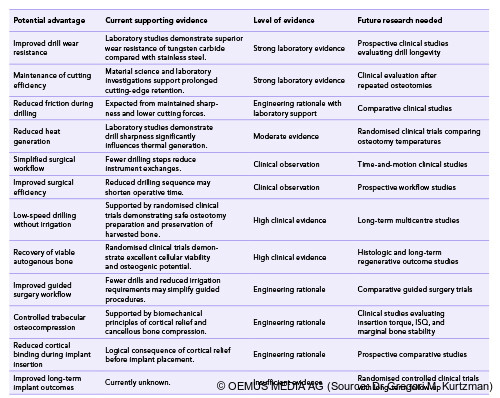
Table 3: Potential clinical advantages of the Crown Down concept: Current evidence and future research needs.
Why implant drills wear
A bone is an exceptionally demanding cutting substrate because cortical bone contains approximately 60 to 70 per cent mineral by weight, primarily hydroxyapatite, producing substantial abrasive forces during implant osteotomy preparation.3-7 As stainless-steel drills are used repeatedly, scanning electron microscopy has demonstrated progressive cutting-edge rounding, abrasion, microchipping, and surface deformation that reduce cutting efficiency (Fig. 1).3-5
Loss of cutting efficiency has important clinical consequences. Dull drills require greater axial pressure and longer contact time to remove bone, increasing friction at the cutting interface and generating additional heat. Eriksson and Albrektsson demonstrated that prolonged exposure of bone to temperatures above approximately 47 °C may result in irreversible thermal injury, emphasising the importance of maintaining sharp cutting instruments during implant surgery.1 Drill longevity is also influenced by bone density, drill design, rotational speed, irrigation, surgical technique, and repeated sterilisation cycles.2-7
These observations have prompted investigation of more wear-resistant cutting materials. Solid tungsten carbide maintains a sharp cutting edge substantially longer than stainless steel and therefore has the potential to reduce friction while maintaining cutting efficiency.6-8 In contrast to the progressive wear observed with stainless-steel drills, Figure 2 demonstrates the minimal cutting- edge wear evident in a solid tungsten carbide drill following repeated osteotomy preparation.
Material science of implant drills
The clinical performance of an implant drill depends on both its design and the properties of the material from which it is manufactured. An ideal drill should maintain a sharp cutting edge, efficiently remove bone with minimal friction, resist corrosion and repeated sterilisation, dissipate heat effectively, and tolerate the torsional and bending forces encountered during surgery.
For decades, surgical stainless steel has been the material of choice because it combines strength, toughness, corrosion resistance, ductility, and relatively low manufacturing cost. One of its greatest advantages is its ability to deform before fracturing under excessive loading, providing an important margin of clinical safety. Its primary limitation is progressive cutting-edge wear, which increases drilling resistance, friction, and thermal generation with repeated clinical use. 2-7
Solid tungsten carbide offers a distinctly different combination of mechanical properties. Its exceptional hardness and abrasion resistance allow it to retain a sharp cutting edge considerably longer than stainless steel, improving cutting efficiency while potentially reducing friction and heat generation.6-8 However, unlike stainless steel, tungsten carbide undergoes very little plastic deformation before fracture. Consequently, successful clinical application depends not only on the drill material itself but also on a drilling sequence that minimises excessive torsional and bending stresses. The principal differences between stainless steel and solid tungsten carbide implant drills are summarized in Table 1. Comparing the relative hardness of materials commonly used for implant drill manufacture, solid tungsten carbide demonstrates substantially greater hardness than ceramic, titanium, and stainless steel (Fig. 3). This exceptional hardness allows the drill to maintain a sharp cutting edge through repeated osteotomy preparation, reducing abrasive wear and preserving cutting efficiency over a greater number of clinical procedures. However, hardness alone does not determine clinical performance. Because tungsten carbide is considerably less forgiving under excessive torsional and bending loads than stainless steel, successful clinical application requires a drilling sequence designed to minimise these stresses.
The engineering challenge
If solid tungsten carbide possesses such favourable cutting characteristics, why has it not replaced stainless steel for implant drills? The answer lies in fracture mechanics. Conventional implant osteotomy preparation begins with a narrow pilot drill that establishes implant position and angulation before progressively enlarging the osteotomy with increasingly larger drills.1-4 Consequently, the smallest drill must penetrate dense cortical bone and is exposed to the greatest torsional and bending loads.
While stainless steel can tolerate these stresses through elastic and plastic deformation, similarly sized tungsten carbide drills are considerably more susceptible to brittle fracture.6-8 Simply substituting tungsten carbide for stainless steel within a conventional ascending drilling sequence would therefore expose the smallest carbide drills to the highest mechanical loads, increasing the likelihood of fracture. The engineering limitation lies not in the material itself, but in the drilling sequence.
The Crown Down concept
The Crown Down concept was developed by Dr Zvi Fudim to address the principal engineering limitation associated with the use of solid tungsten carbide implant drills. Rather than exposing the smallest drills to the greatest mechanical stresses, the drilling sequence is reorganised so that the largest and mechanically strongest drill encounters the highest resistance first.
Unlike conventional implant systems, the Crown Down approach does not simply reverse the traditional sequential drilling protocol. Instead, the drilling sequence is designed around the mechanical properties of tungsten carbide and the differing resistance characteristics of cortical and trabecular bone. Drill selection is determined by implant diameter and the portion of the osteotomy being prepared rather than by progressively enlarging the osteotomy from a small pilot drill to the final diameter. The principal differences between conventional sequential drilling and the Crown Down concept are summarised in Table 2.
One commercially available implementation of this concept is the Crown Down Kit (Crown Down), which incorporates solid tungsten carbide drills organised according to this engineering philosophy. Unlike conventional implant systems that begin with a 2.0 mm pilot drill, the smallest drill in the kit is selected according to the planned implant diameter. For example, preparation of a 3.2 mm implant osteotomy utilises a 2.75 mm drill rather than a 2.0 mm pilot drill, thereby avoiding unnecessary use of extremely small tungsten carbide drills that would otherwise be exposed to high torsional stresses. The range of available Crown Down tungsten carbide drills, which are selected according to the planned implant diameter rather than by a conventional pilot-to-final sequence (Fig. 4).
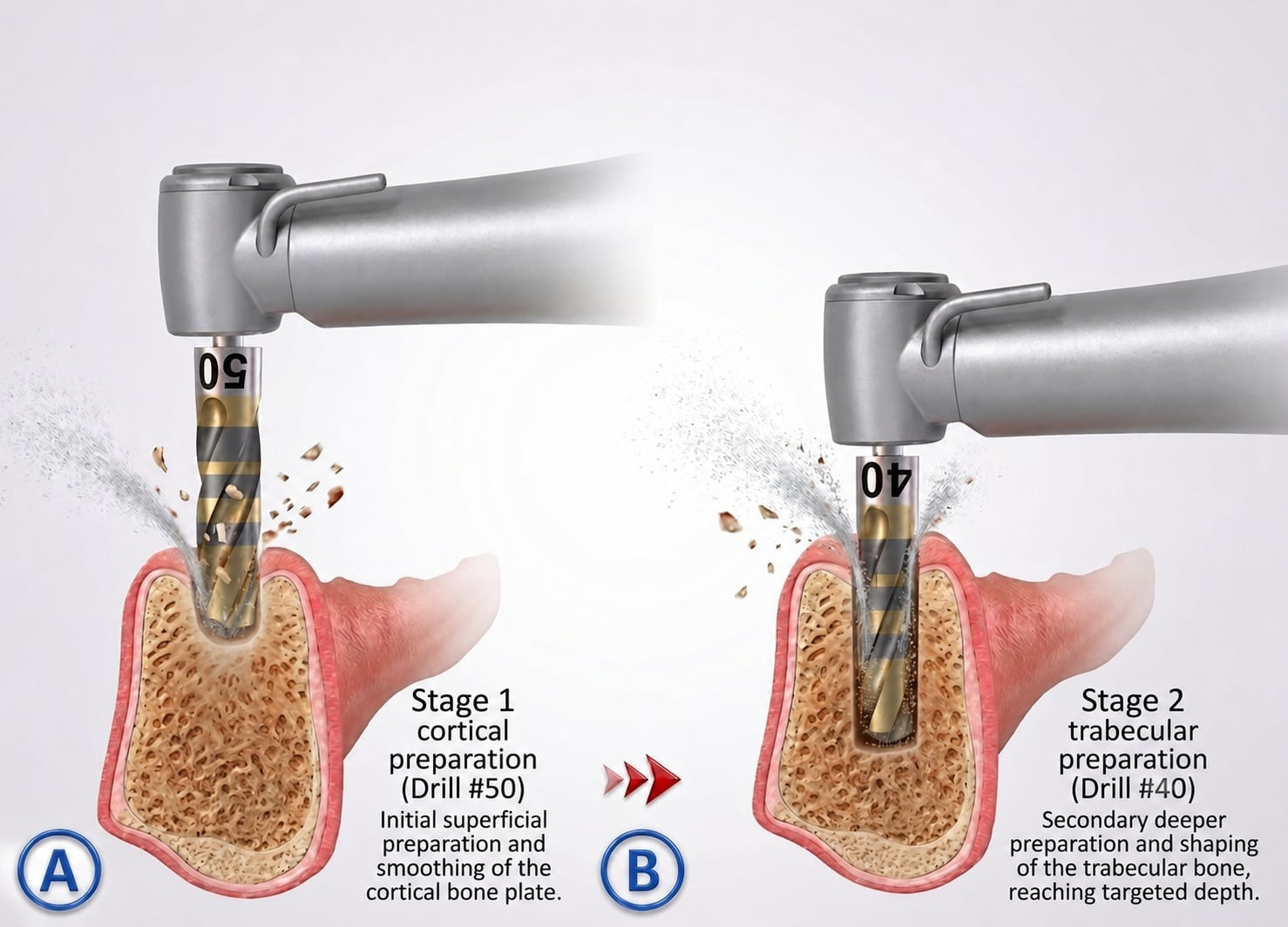
For placement of a 4.8 mm implant, the sequence begins with a larger-diameter cortical drill corresponding to the planned implant diameter. Because this drill possesses substantially greater cross-sectional area and bending stiffness, it is considerably more resistant to torsional overload than smaller drills. Its primary purpose is to relieve the dense cortical plate, which represents the region of greatest drilling resistance. The progressive Crown Down drilling sequence (Fig. 5) demonstrates how the osteotomy is enlarged incrementally from the crestal cortex toward the final working depth while reducing cortical resistance before deeper preparation.
Once the cortical bone has been prepared, smaller tungsten carbide drills are used only within the deeper trabecular portion of the osteotomy. At this stage, the cortical resistance has already been eliminated, allowing the smaller drills to function under substantially lower mechanical loads. Consequently, they experience reduced binding, lower lateral bending forces, decreased torsional stress, and a markedly reduced likelihood of brittle fracture. The simplified two-drill Crown Down protocol is illustrated in Figure 6. A cortical drill matching the planned implant diameter enlarges only the crestal portion of the osteotomy to relieve cortical resistance (A), after which a final implant-specific drill completes the osteotomy to the planned depth and diameter (B). This approach replaces the conventional five- to eight-drill sequential protocol while reducing instrument changes and mechanical loading on the drills.
This sequence is fundamentally different from simply manufacturing conventional implant drills from tungsten carbide. If solid tungsten carbide drills were used in the traditional ascending pilot-to-final sequence, the smallest drills, particularly those measuring approximately 2.5 to 3.0 mm in diameter would be subjected to the greatest torsional and bending stresses while penetrating dense cortical bone. Because tungsten carbide exhibits limited plastic deformation prior to failure, such loading conditions would substantially increase the risk of sudden brittle fracture.
Accordingly, the innovation of the Crown Down concept lies not simply in the use of tungsten carbide as a cutting material, but in the integration of material science with drill architecture and surgical biomechanics. By matching drill diameter, drilling order, and regional bone resistance to the mechanical behaviour of solid tungsten carbide, the system enables the safe clinical application of a material that would otherwise be poorly suited to a conventional sequential drilling protocol.
Cortical bone is the real obstacle
One of the fundamental principles underlying the Crown Down concept is recognising that not all bone contributes equally to drilling resistance. Cortical bone is highly mineralised and possesses an elastic modulus several times greater than cancellous bone, accounting for most drilling torque, drill wear, and heat generation during osteotomy preparation.2-8 In contrast, trabecular bone offers substantially less resistance. Conventional sequential drilling repeatedly enlarges the cortical plate with every drill, whereas the Crown Down concept prepares the cortical bone once before completing the osteotomy within the less resistant trabecular bone. This reduces torsional stress on smaller drills, decreases cumulative friction, and improves drilling efficiency. The innovation is not simply the use of tungsten carbide, but the integration of drill material, drill diameter, and drilling sequence with the biomechanics of cortical and trabecular bone.
Osteocompression and primary stability
Primary implant stability is essential for predictable osseointegration, particularly when immediate placement or immediate loading protocols are used. Although implant stability depends on implant design, bone density, and surgical technique, osteotomy preparation remains a major determinant of the mechanical relationship between the implant and surrounding bone.15
Conventional undersised osteotomies achieve stability by compressing both cortical and trabecular bone. While cortical engagement contributes to insertion torque, excessive cortical resistance may increase crestal stresses without proportionally improving stability. In dense bone, excessive insertion torque may contribute to incomplete implant seating or the clinical phenomenon commonly referred to as a “spinner.”
The Crown Down concept approaches stability differently. Because the cortical bone has already been prepared to the planned implant diameter, implant insertion relies primarily on controlled compression of the more elastic trabecular bone while minimising unnecessary cortical binding. Although clinical confirmation is still needed, this approach is biomechanically consistent with current concepts of implant stability.15 Recent systematic reviews have shown that osteotomy techniques capable of modifying bone condensation can significantly influence primary implant stability, although long-term effects on marginal bone levels and implant survival continue to be investigated.16
Low-speed drilling and thermal management
Conventional implant osteotomy preparation relies on copious irrigation to control frictional heat. The Crown Down concept instead focuses on maintaining cutting efficiency, thereby reducing the friction responsible for heat generation. Because solid tungsten carbide maintains a sharp cutting edge substantially longer than stainless steel, efficient cutting can often be achieved at lower rotational speeds.6-9
Current evidence indicates that low-speed osteotomy preparation without irrigation can be performed safely when appropriate instrumentation and surgical technique are used.9 Reduced rotational speed, sustained cutting efficiency, and lower friction may decrease heat generation while maintaining bone viability. Because thermal production remains influenced by multiple factors, including bone density, drill geometry, drilling pressure, cutting efficiency, drilling time, and surgical technique with low-speed drilling should be viewed as one component of a comprehensive thermal management strategy rather than a replacement for sound surgical technique.1-9
Autogenous bone harvesting
An additional advantage of low-speed drilling without continuous irrigation is efficient collection of autogenous bone. Autogenous bone remains the benchmark grafting material because it provides osteogenic cells, osteoinductive growth factors, and an osteoconductive scaffold.10,11 During conventional drilling, irrigation rapidly washes much of the particulate bone into the suction system, limiting recovery.
With low-speed preparation, bone chips remain attached to the drill flutes and can be transferred directly to the surgical site. The larger cortical drill frequently yields sufficient particulate bone to repair small periimplant dehiscence defects, extraction socket deficiencies, or localised contour defects without requiring a secondary donor site. Randomised clinical studies have demonstrated excellent cellular viability and osteogenic potential of bone harvested during lowspeed drilling without irrigation.9 Although larger grafting procedures still require additional graft materials, recovery of biologically active autogenous bone represents a valuable secondary benefit of the Crown Down approach.
Guided surgery applications
Digital implant planning and guided surgery have become integral components of contemporary implant therapy. Although guided surgery improves implant positioning and prosthetically driven treatment planning, guide sleeves may partially restrict coolant access to the drill tip and require multiple drill exchanges during osteotomy preparation.13
Because the Crown Down concept emphasises efficient cutting at low rotational speeds while reducing the number of drilling steps, dependence on continuous irrigation may be reduced, improving visualisation and simplifying surgical workflow. Fewer instrument exchanges may also improve efficiency during both single-tooth and full-arch guided implant procedures. Although comparative clinical evidence remains limited, the combination of simplified drilling, efficient cutting, and low-speed preparation appears well suited for digital implant workflows.
Clinical perspective
The Crown Down concept should be viewed not simply as another implant drilling protocol but as an engineering-based approach that aligns drill material, drill sequence, and bone biomechanics to optimise osteotomy preparation. While its biomechanical rationale is supported by laboratory evidence and early clinical experience, prospective comparative clinical studies are needed to determine whether these theoretical advantages translate into improved long-term clinical outcomes.
Discussion
Although conventional sequential drilling remains the benchmark for implant osteotomy preparation, the protocol was developed before many of today’s advances in implant design, digital treatment planning, guided surgery, and regenerative techniques.1-8 The Crown Down concept reexamines osteotomy preparation by shifting the emphasis from sequential enlargement of the osteotomy to management of mechanical loading.
Rather than repeatedly enlarging the cortical plate with progressively larger drills, the Crown Down approach prepares the dense cortical bone first using the largest and mechanically strongest drill, allowing subsequent preparation of the trabecular bone under substantially lower torsional and bending stresses. This drilling architecture, rather than the use of tungsten carbide alone, represents the principal innovation of theconcept. By matching drill material, drill diameter, drilling sequence, and regional bone resistance to the mechanical behaviour of solid tungsten carbide, the system enables safe clinical use of a material that would be poorly suited to a conventional ascending drilling sequence.
The concept also recognises that cortical bone, rather than trabecular bone, is responsible for most drilling resistance, drill wear, and frictional heat generation. Preparing the cortical plate once before completing the trabecular osteotomy may reduce cumulative friction, simplify the drilling sequence, and improve surgical efficiency. In addition, low-speed drilling without continuous irrigation facilitates recovery of viable autogenous bone for management of small peri-implant defects while avoiding a secondary donor site.9-11
Although the biomechanical rationale is well supported by material science and laboratory investigations, prospective comparative clinical studies are still needed to determine whether these engineering advantages translate into improved implant stability, reduced complications, or superior long-term clinical outcomes. Table 3 summarises the proposed clinical advantages of the Crown Down concept, distinguishing those supported by current laboratory or clinical evidence from those that remain based primarily on engineering principles and require prospective clinical validation.
Conclusion
Sequential implant osteotomy preparation has remained remarkably consistent for more than five decades because it is predictable, reproducible, and supported by extensive clinical evidence. Nevertheless, advances in material science provide opportunities to reconsider how implant osteotomies are prepared.
The Crown Down concept represents an engineering-based approach that aligns drill material, drill sequence, and bone biomechanics rather than simply enlarging the osteotomy sequentially. By allowing the strongest drill to prepare the region of greatest mechanical resistance, the concept addresses one of the principal limitations that has historically prevented the widespread use of solid tungsten carbide in implant surgery.
Potential benefits include improved wear resistance, maintenance of cutting efficiency, simplified workflow, efficient autogenous bone harvesting, and reduced dependence on continuous irrigation. While these advantages are supported by sound engineering principles and encouraging early evidence, prospective comparative clinical studies remain necessary to determine whether they translate into superior long-term clinical outcomes.
Rather than simply introducing another implant drill system, the Crown Down concept encourages clinicians to reconsider the biomechanics of implant osteotomy preparation. If future research confirms its theoretical and laboratory advantages, it may represent an important evolution in surgical implant instrumentation.
The true innovation of the Crown Down concept is not simply the substitution of solid tungsten carbide for stainless steel, but the redesign of implant osteotomy preparation to match drill material, drill diameter, and drilling sequence with the biomechanical resistance of cortical and trabecular bone. This integration of material science and surgical biomechanics provides the engineering foundation for the safe clinical application of solid tungsten carbide implant drills.